Source Heated Battery Calendering Machine for Lab, Pilot, Production
Explore 30 listings for the heated battery calendering machine suitable for lab, pilot, and production lines. Buyers can compare specifications like power, width, and automation levels to find the right equipment for electrode processing needs.
Key considerations
Products List


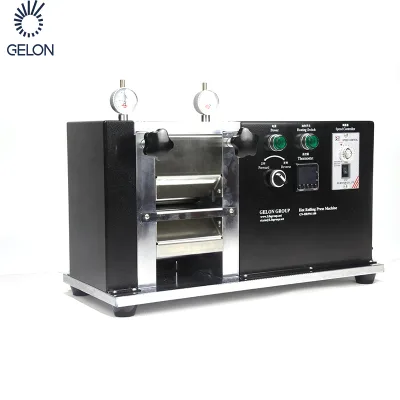
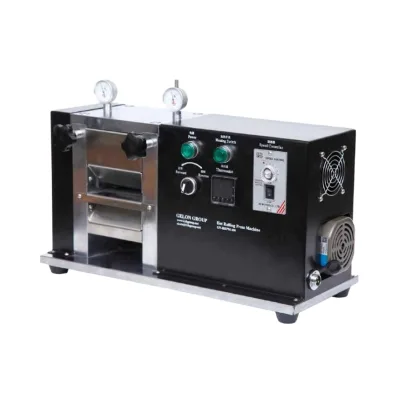
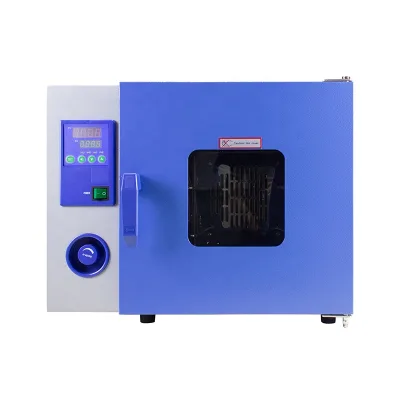


TMAXCN Brand Hot Roller Press Calendering Machine for Battery Production
$10000.00 - $500000.00
Moq: 1


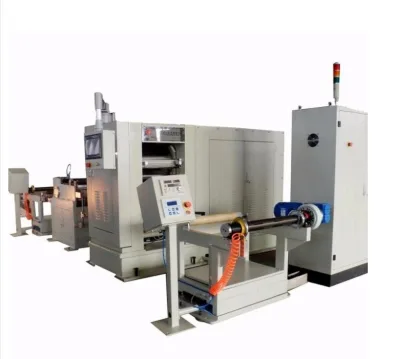


Comprehensive Sourcing Guide
Strategic Sourcing Guide for Heated Battery Calendering Machines
The global transition toward high-energy-density battery systems has intensified the demand for precision manufacturing equipment, particularly in the electrode processing stage. Heated battery calendering machines are critical assets in this supply chain, responsible for compacting electrode sheets to achieve optimal density, porosity, and mechanical stability. For procurement professionals, navigating the market requires a disciplined approach that distinguishes between verified product attributes and general market expectations. This guide synthesizes available data to provide a framework for evaluating suppliers, understanding technical specifications, and mitigating procurement risks without relying on unverified claims or specific vendor recommendations.
Technical Specifications and Operational Parameters
When evaluating a heated battery calendering machine, the primary focus must be on the precision of the rolling mechanism and the thermal control systems. The core function involves compressing materials such as copper foil and aluminum foil, which serve as the current collectors for battery electrodes. Based on observed market data, the machinery often supports specific material thickness ranges, with negative electrodes typically ranging from 6 to 10 micrometers and positive electrodes from 10 to 25 micrometers. The base materials themselves, whether copper or aluminum, generally exhibit thickness capabilities spanning from 6 to 300 micrometers.
The mechanical structure of these machines varies, with some units designed as vertical configurations while others may feature horizontal layouts. A critical specification to verify is the adjustable gap for rolling thickness, which in some observed models ranges from 0 to 3 millimeters. This adjustability is essential for accommodating different battery chemistries and electrode densities. Furthermore, the width of the electrode being processed is a limiting factor; observed specifications indicate a maximum electrode width capability of up to 680 millimeters, with some models supporting a range of 200 to 680 millimeters.
Power consumption and source are significant operational variables. The market presents a mix of power ratings, with specific units observed at 2000W and others at 11kW. The power supply requirements also vary, with some systems operating on standard single-phase inputs while others require a three-phase four-wire supply of 380V at 50Hz. Thermal management is equally vital; the heating mode often utilizes stainless steel heating elements, with temperature ranges adjustable from 0 to 250 degrees Celsius. This precise thermal control ensures that the coating materials, which may include graphite, silicon carbon, LFP, LCO, LMO, and NMC, are processed without degradation.
Compliance and Certification Verification
In the industrial equipment sector, compliance with international standards is non-negotiable for safety and market access. The most frequently observed certification in the current market data is the CE mark. Buyers must treat this as a baseline requirement rather than a guarantee of superior quality. The presence of the CE certification indicates that the equipment meets the essential health, safety, and environmental protection requirements for products sold within the European Economic Area. However, procurement teams should not assume that all listed units possess this certification without explicit verification on a per-unit basis.
Beyond the CE mark, buyers should scrutinize the "Automatic Grade" of the machinery. The market data indicates a spectrum ranging from semi-automatic to fully automatic systems. A semi-automatic grade implies a higher degree of human intervention, which may affect throughput consistency and labor costs. Conversely, fully automatic systems, often featuring electronic speed control and demoulding capabilities, offer higher efficiency but may require more complex integration with existing factory lines. The "Mould Life" is another critical metric; observed data suggests a potential lifespan of over 1000 shots, though this figure must be validated against the specific application's cycle count.
Cost Drivers and Pricing Dynamics
The pricing for heated battery calendering machines is highly variable, reflecting differences in automation levels, material specifications, and structural complexity. The observed price range in the market spans from approximately 1,500 USD to 500,000 USD. This vast disparity is not arbitrary but is driven by several key factors. First, the scale of the machine is a primary determinant; units with standard dimensions such as 600mm x 220mm x 320mm are significantly less expensive than large-scale industrial units measuring 2700mm x 610mm x 1600mm.
Second, the level of customization plays a substantial role. The market data confirms that customization is available, and the attribute "Customized" is frequently listed. Customization can involve modifying the rolling gap, adjusting the conveyor speed (observed ranges include 1 to 7.5 meters per minute), or integrating specific heating modes. These bespoke features increase the engineering and manufacturing costs, pushing the price toward the higher end of the spectrum.
Third, the material and construction quality influence the final cost. Machines constructed with robust materials to ensure functions like anti-corrosion and high-temperature resistance command a premium. Additionally, the weight of the machine, which can range from 85kg for smaller units to approximately 210kg for larger models, correlates with the amount of steel and structural components used, directly impacting the manufacturing cost. Buyers should be aware that the Minimum Order Quantity (MOQ) is generally low, with observed ranges of 1 to 2 units, allowing for flexibility in initial procurement without requiring bulk commitments.
Typical Applications and Material Compatibility
Heated battery calendering machines are primarily designed for the production of lithium-ion batteries and related energy storage devices. The versatility of these machines allows them to process a wide array of coating materials. The observed data lists specific coatings including graphite, silicon carbon, LFP (Lithium Iron Phosphate), LCO (Lithium Cobalt Oxide), LMO (Lithium Manganese Oxide), and NMC (Nickel Manganese Cobalt). This broad compatibility makes the equipment suitable for various battery chemistries used in electric vehicles, portable electronics, and grid storage systems.
The machines are also designed to handle specific base materials, primarily copper foil and aluminum foil. The ability to process these materials with thicknesses ranging from 6 to 300 micrometers ensures that the equipment can be utilized for both thin-film applications and heavier-duty industrial battery production. The "Simple Structure" attribute observed in some models suggests that certain units are optimized for ease of operation and maintenance, making them suitable for facilities where rapid changeovers between different battery types are necessary.
Furthermore, the application extends beyond just the rolling process. Some units are integrated into packaging lines, featuring functions such as POF shrink film wrapping and four-side seal types. This indicates that the equipment ecosystem often includes downstream processing capabilities, allowing for a more streamlined production workflow where the calendered electrodes can be immediately packaged or prepared for the next stage of battery assembly.
Supplier Evaluation and Origin Considerations
When evaluating potential suppliers, the geographic origin of the equipment is a critical data point. The majority of the observed products originate from China, with specific regions including Fujian and Qingdao being prominent. While these regions are known for their manufacturing capabilities, buyers must conduct rigorous due diligence to ensure that the supplier's location aligns with their logistical and quality expectations. The "prod_origin" field should be verified for every inquiry, as it affects shipping costs, lead times, and the ease of communication.
Supplier evaluation should also focus on the "Condition" of the equipment. The market data consistently lists products as "New," but buyers must clarify whether this refers to brand-new units or refurbished equipment. The "Warranty" period is another key indicator of supplier confidence; a standard 12-month warranty is observed, but buyers should negotiate terms that cover critical components like heating elements and rollers.
The "Installation" method is another differentiator. Some machines are designed for desktop installation, which implies a compact footprint and ease of setup, while larger industrial units may require specialized floor mounting and infrastructure. The "Packaging" details, such as wooden boxes or plastic film with sandwich plates, are also important for ensuring the equipment arrives without damage. Buyers should verify that the packaging material is robust enough to withstand international shipping, especially for heavy units weighing over 200kg.
Quality Control and Long-Term Procurement
Ensuring the long-term reliability of a heated battery calendering machine requires a proactive quality control strategy. The "Feature" of automation is a significant advantage, as it reduces human error and ensures consistent processing parameters. However, buyers must verify the "Adjust Speed" capabilities, which are often electronically controlled. This feature allows for precise adjustments to the conveyor speed, which is vital for maintaining uniform electrode density.
Long-term procurement considerations should include the availability of spare parts and the technical support offered by the supplier. The "Advantage" of a simple structure can be a double-edged sword; while it may facilitate easier repairs, it is essential to confirm that the design allows for the replacement of wear parts like rollers and heating elements. The "Mould Life" specification, observed as greater than 1000 shots, should be treated as a benchmark rather than a guarantee, as actual lifespan depends heavily on maintenance practices and operating conditions.
Buyers should also consider the "Function" attributes such as anti-corrosion and high-temperature resistance. These features are critical for the longevity of the machine in harsh industrial environments. Regular maintenance schedules should be established to inspect the heating elements and the rolling gap to ensure they remain within the specified tolerances. Additionally, the "Power Source" being electric necessitates a stable power supply; buyers must ensure their facility can support the required voltage and phase, particularly for units requiring 380V three-phase power.
Comparative Analysis of Machine Configurations
To aid in decision-making, the following table summarizes key differences observed in the market data for heated battery calendering machines. This comparison highlights the variance in specifications that buyers must consider when selecting a unit that fits their specific production needs.
| Feature Category | Small/Compact Configuration | Large/Industrial Configuration |
|---|---|---|
| Dimensions | Approx. 600mm x 220mm x 320mm | Approx. 2700mm x 610mm x 1600mm |
| Weight | 85 kg | Approx. 210 kg |
| Power Rating | 2000W | 11 kW |
| Power Supply | Standard Electric | 380V/50Hz (Three-Phase) |
| Rolling Thickness | 0-3mm (Adjustable) | 0-3mm (Adjustable) |
| Electrode Width | Max 200mm | Max 200-680mm |
| Temperature Range | 0-250°C (Adjustable) | 0-250°C (Adjustable) |
| Conveyor Speed | 1-7.5 m/Min | 1-7.5 m/Min |
| Automatic Grade | Semi-Automatic | Automatic |
| Certification | CE (Verify per unit) | CE (Verify per unit) |
| Origin | Fujian, China | Qingdao, China |
| Packaging | Wooden Box / Plastic Film | Plastic Film and Sandwich Plate |
This comparison underscores that while core functionalities like temperature control and rolling gap adjustment remain consistent, the scale, power requirements, and automation levels vary significantly. Buyers must align these specifications with their production volume, facility infrastructure, and budget constraints.
Final Procurement Recommendations
The acquisition of a heated battery calendering machine is a strategic decision that impacts the entire battery production workflow. By focusing on verified technical specifications, confirming compliance certifications, and understanding the cost drivers, buyers can make informed decisions that mitigate risk. The market offers a diverse range of options, from compact desktop units to large-scale industrial systems, each with unique advantages and limitations.
Buyers should prioritize suppliers who provide transparent documentation regarding the machine's origin, warranty terms, and maintenance requirements. The availability of customization options allows for tailoring the equipment to specific battery chemistries and production needs, but this must be balanced against the potential for increased costs and lead times. Ultimately, the goal is to secure a machine that not only meets current production demands but also offers the flexibility and reliability required for long-term operational success in the evolving battery manufacturing landscape.
FAQs
What certifications do heated battery calendering machines have?
The observed products carry CE certification as a baseline safety compliance. Buyers must verify this explicitly for each unit since not all listed items guarantee this status without direct confirmation.
Can these machines process different electrode materials?
Yes, the machines support various coatings including graphite, silicon carbon, LFP, LCO, LMO, and NMC. They are designed to handle copper and aluminum foils with specific thickness ranges for negative and positive electrodes.
What is the adjustable rolling thickness range for these units?
The rolling thickness gap is adjustable from 0 to 3 millimeters on specific models. This feature allows operators to accommodate different battery chemistries and achieve the required electrode density during the calendering process.
How much power do these machines typically consume?
Power ratings vary, with observed units ranging from 2000W to 11kW depending on the model. Some systems require a three-phase four-wire supply of 380V at 50Hz for stable operation.
Are these machines available for customization?
Customization is available for many of the listed products to meet specific production needs. Buyers can request adjustments to features like conveyor speed or heating modes to fit their facility requirements.
What is the warranty period for these machines?
A standard 12-month warranty is observed for the new equipment listed in the market. This coverage typically applies to the machine structure but should be confirmed for critical components like heating elements.
Where are these machines manufactured and shipped from?
The majority of observed units originate from China, specifically regions like Fujian and Qingdao. Buyers should verify the specific origin for each inquiry to determine shipping costs and lead times accurately.